
EXPANDING THE COLOR COMPUTER
THE COMPUTER THAT REFUSED TO STAY STOCK
ONE COMPUTER. A THOUSAND POSSIBILITIES.
When Radio Shack introduced the TRS-80 Color Computer in 1980, it was a remarkably simple machine. A keyboard, a television, a cassette recorder and a cartridge slot were enough to get started.
For many owners, they weren't enough for very long.
Almost immediately, Color Computer users began looking for ways to make their machines do more. More memory. Better keyboards. Disk drives. Printers. Modems. Better displays. More cartridge slots. Speech. Music. Hard drives. Laboratory interfaces. Home automation. Robotics.
If the Color Computer couldn't do something, chances were good that somebody would figure out how to make it do it.
Radio Shack produced an extensive line of peripherals of its own, but an enormous third-party industry grew alongside it. Some products became commonplace. Others were produced in small quantities. Some are known today only through advertisements, magazine articles and surviving documentation.
And a few leave us asking a rather interesting question:
Did this thing actually get made?
CoCo owners didn't always wait for someone else to manufacture what they wanted.
Magazines such as The Rainbow and HOT CoCo, along with books, newsletters and user groups, published hardware projects ranging from simple cables and switches to memory expansions, video interfaces, disk controllers, EPROM programmers, robotics and complete peripheral interfaces.
With a soldering iron, a handful of components and a willingness to void the warranty, the Color Computer could become almost anything.
NOT SIMPLY THE COMPUTER TANDY BUILT, BUT THE COMPUTER ITS OWNERS TURNED IT INTO.
EXPLORE THE HARDWARE
The Color Computer aftermarket became large enough that no single page can reasonably tell the entire story. The museum is therefore organized into the major categories below.
These sections will document both Radio Shack and third-party hardware, surviving examples, contemporary advertisements and documentation, and the people and companies responsible for creating it.
Expansion Systems & Bus Interface
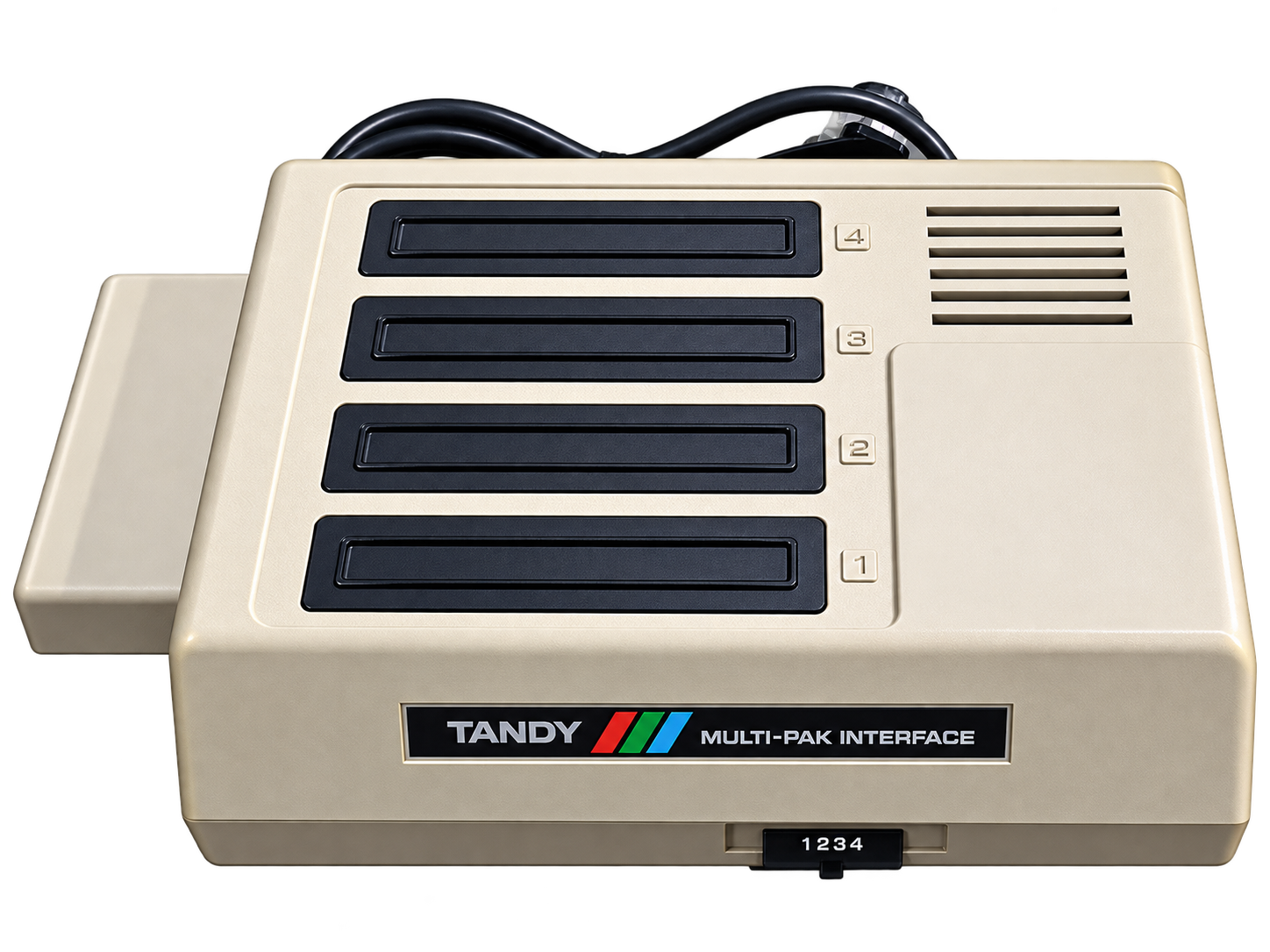
The CoCo had one cartridge slot. CoCo owners quickly discovered that one wasn't enough.
Multi-Pak interfaces, bus expanders and expansion chassis from Radio Shack and third-party manufacturers turned that single connector into the center of some remarkably elaborate systems.
Storage Systems of All Types
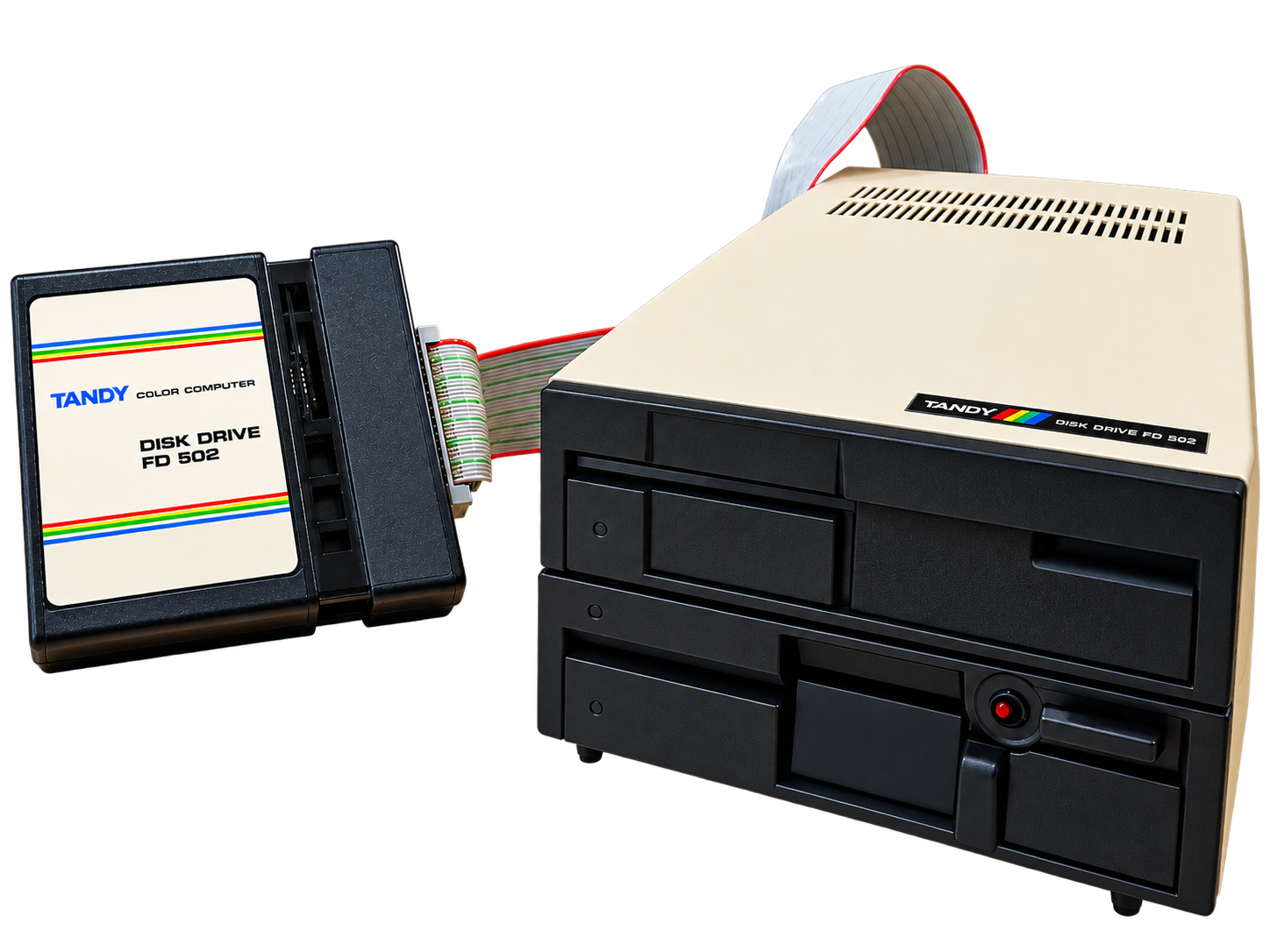
The Color Computer began with cassette tape, but it certainly didn't stay there.
Floppy drives, unusual miniature disk systems, RAM disks, hard drives, SCSI, IDE and other storage systems continually expanded what the CoCo could hold.
Memory & Processor Upgrades
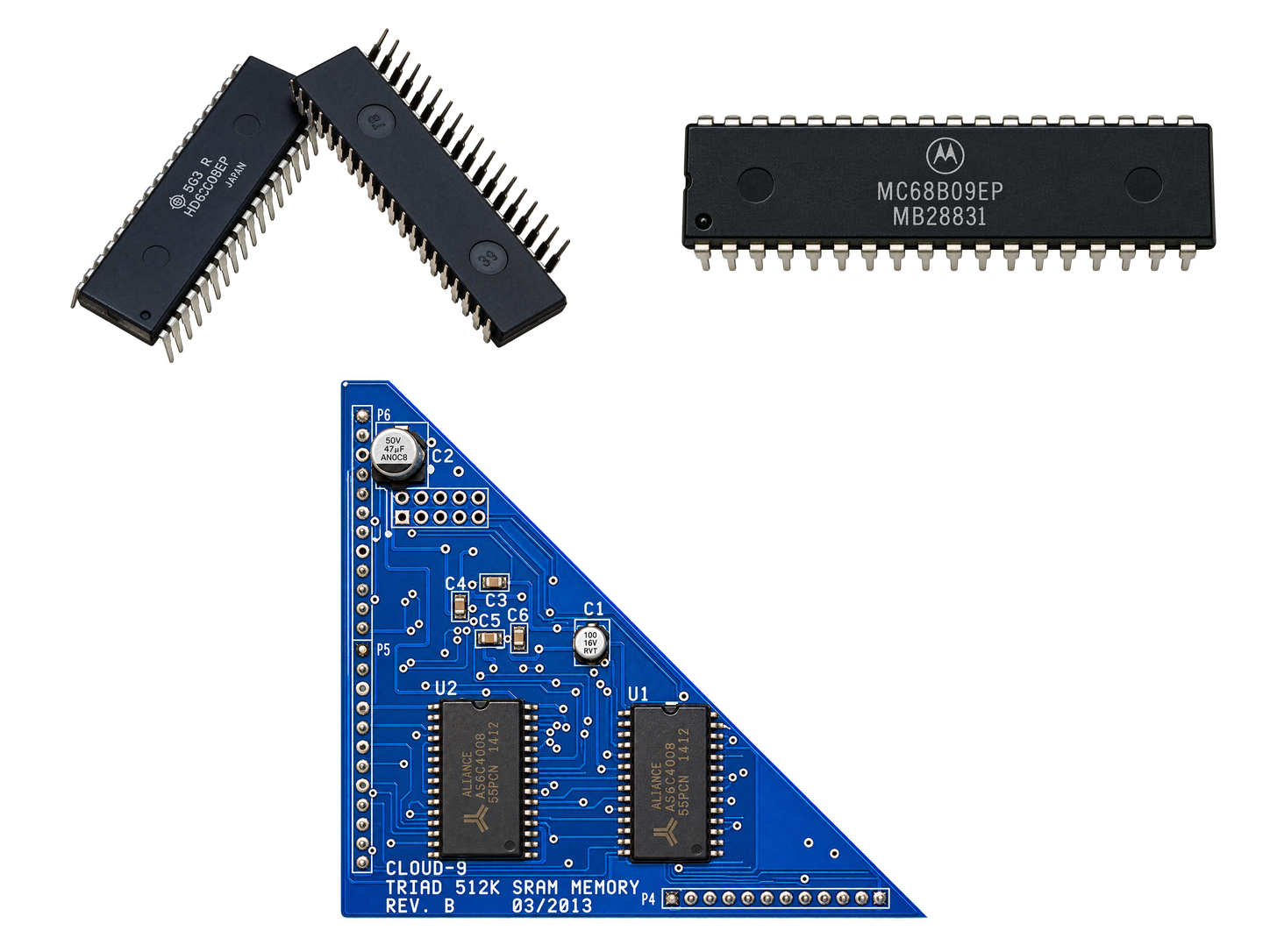
4K became 16K. Then 32K. Then 64K. The CoCo 3 went from 128K to 512K, then to one, two and eight megabytes.
And once owners started replacing memory, even the processor wasn't necessarily safe once the HD63C09 was uncovered as major upgrade.
Keyboards, Controllers & HID's
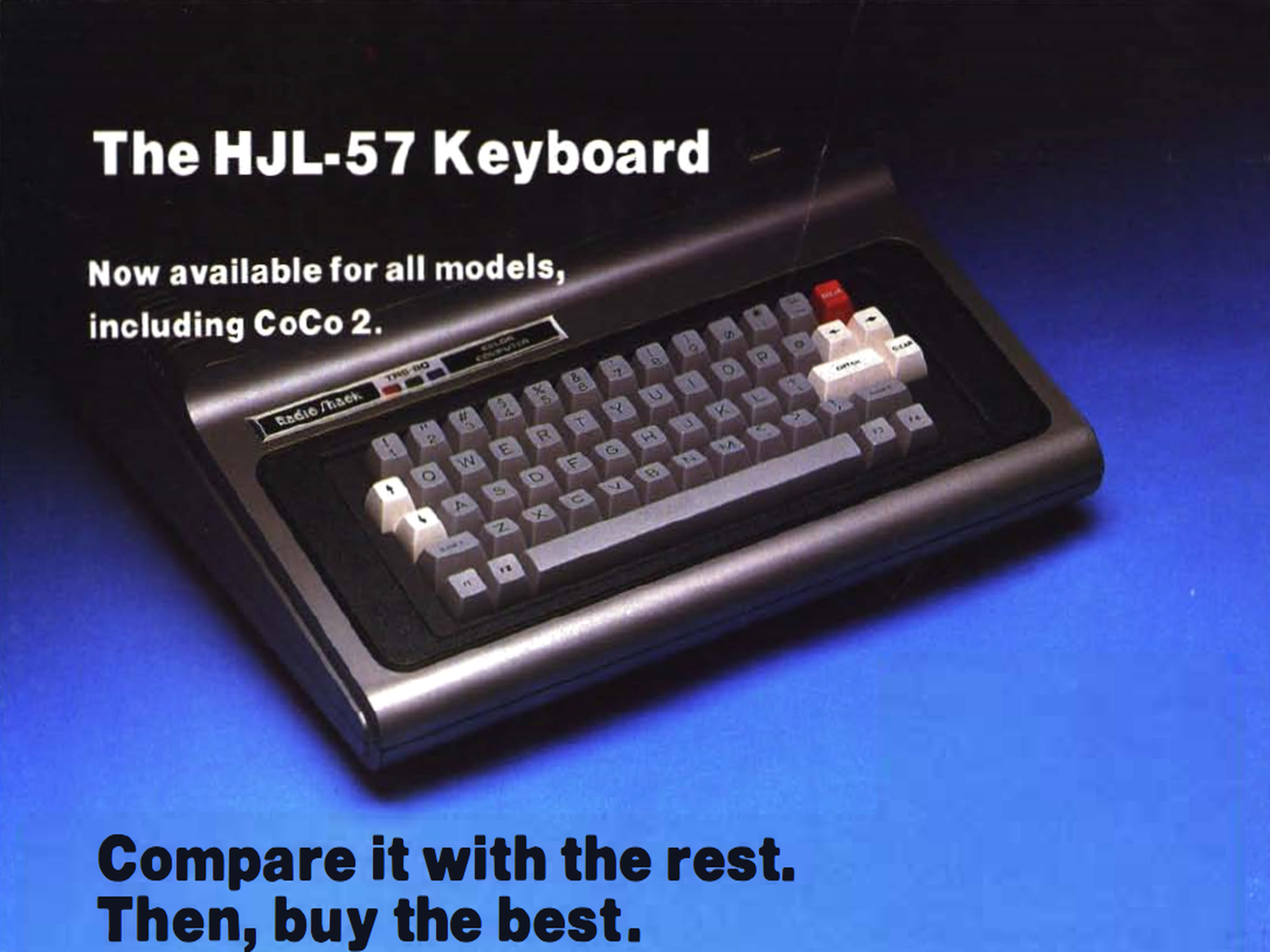
Some of the earliest Color Computer upgrades were sitting directly under the owner's fingers.
Replacement keyboards, numeric keypads, joystick interfaces, mice, light pens, light guns and other controllers changed how users interacted with the machine.
Video & Display Hardware
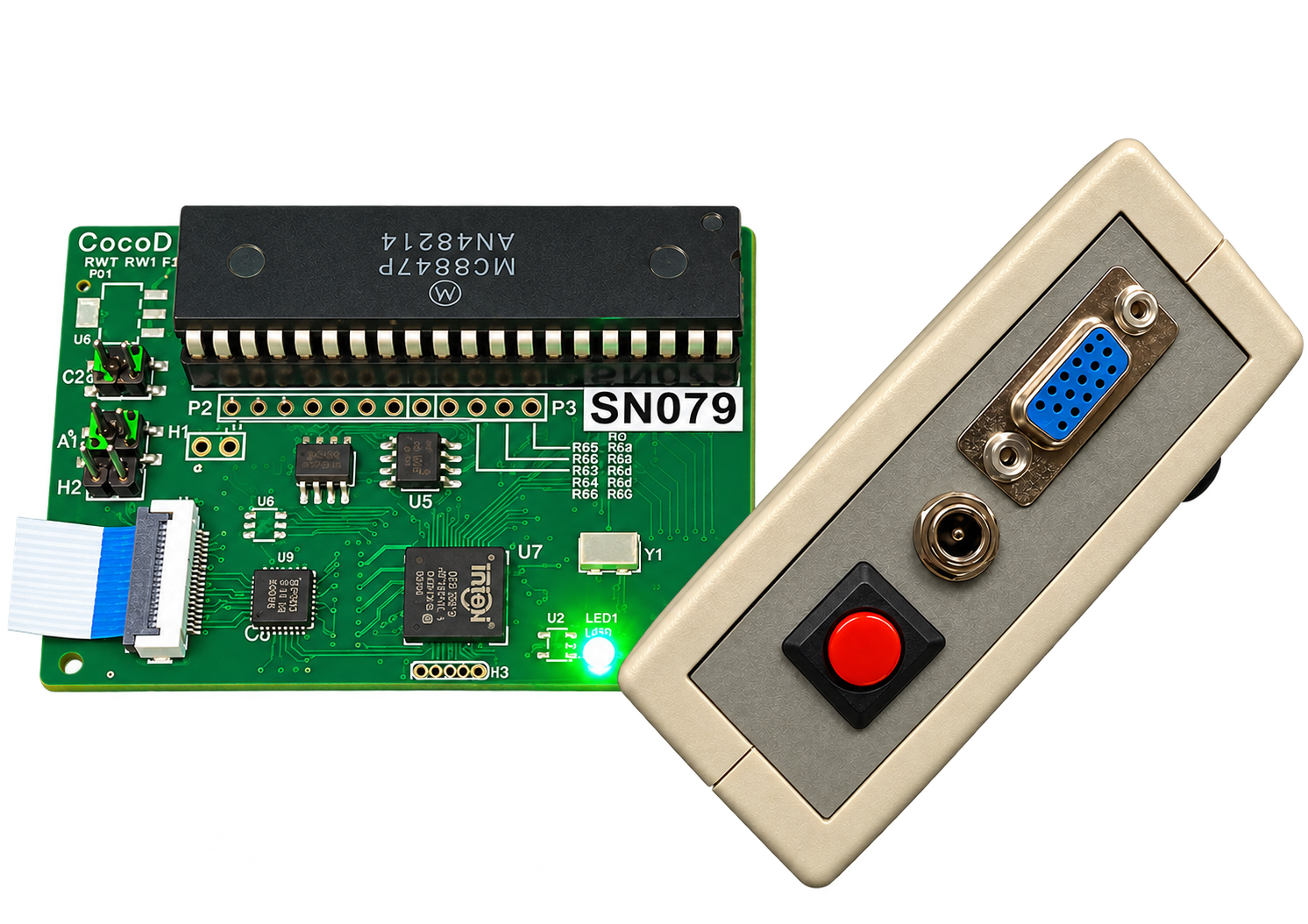
The original Color Computer was designed to connect to a television.
Monitor adapters, composite modifications, enhanced text displays, 80-column systems, RGB hardware and other video upgrades continually pushed beyond that limitation.
Sound, Speech & Music
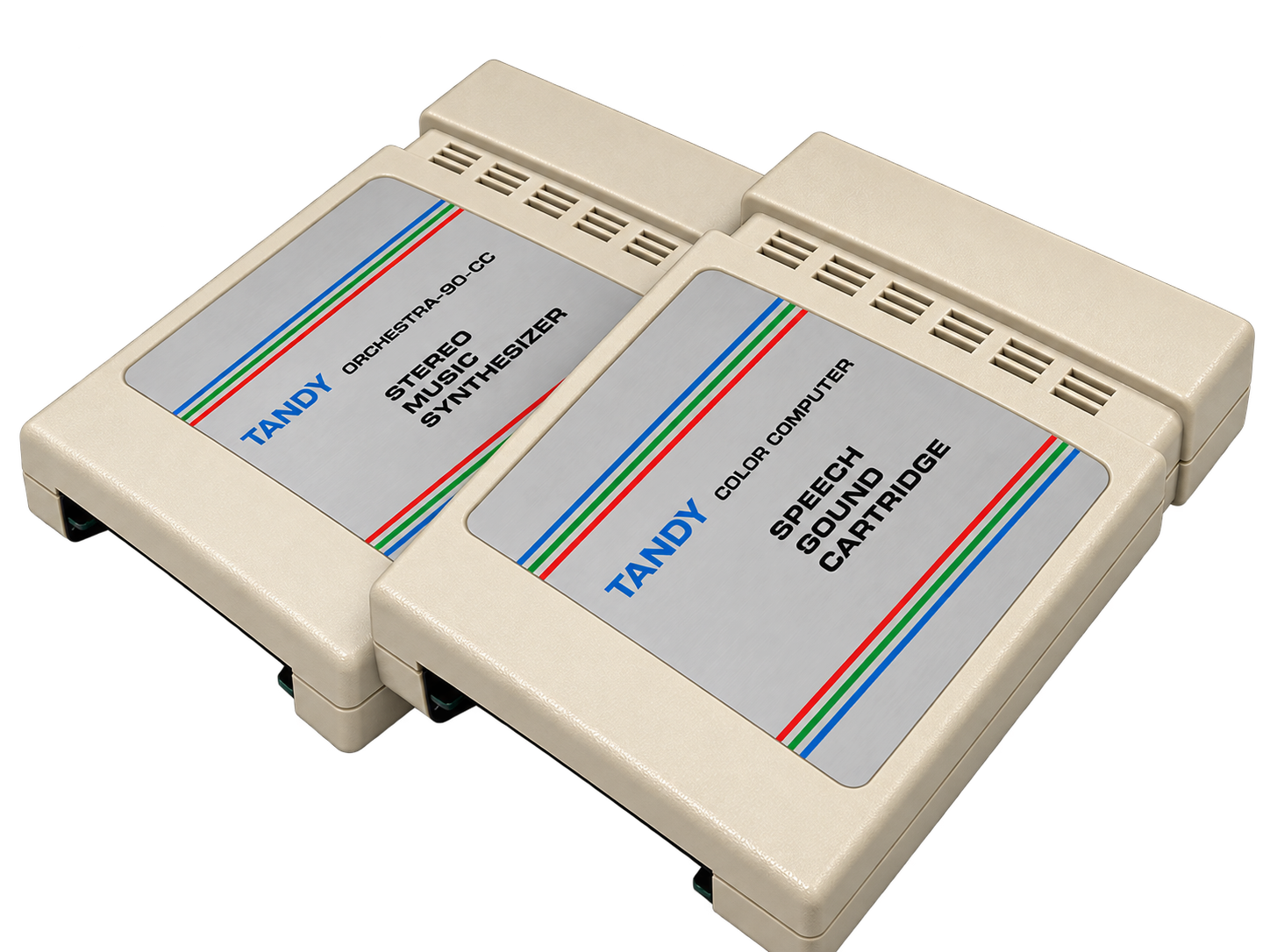
The CoCo could make sound. Third-party developers decided it should make considerably more of it.
Speech synthesizers, music systems, multi-voice sound hardware, MIDI and even speech-recognition systems expanded the machine's audio capabilities.
Communications & External I/O
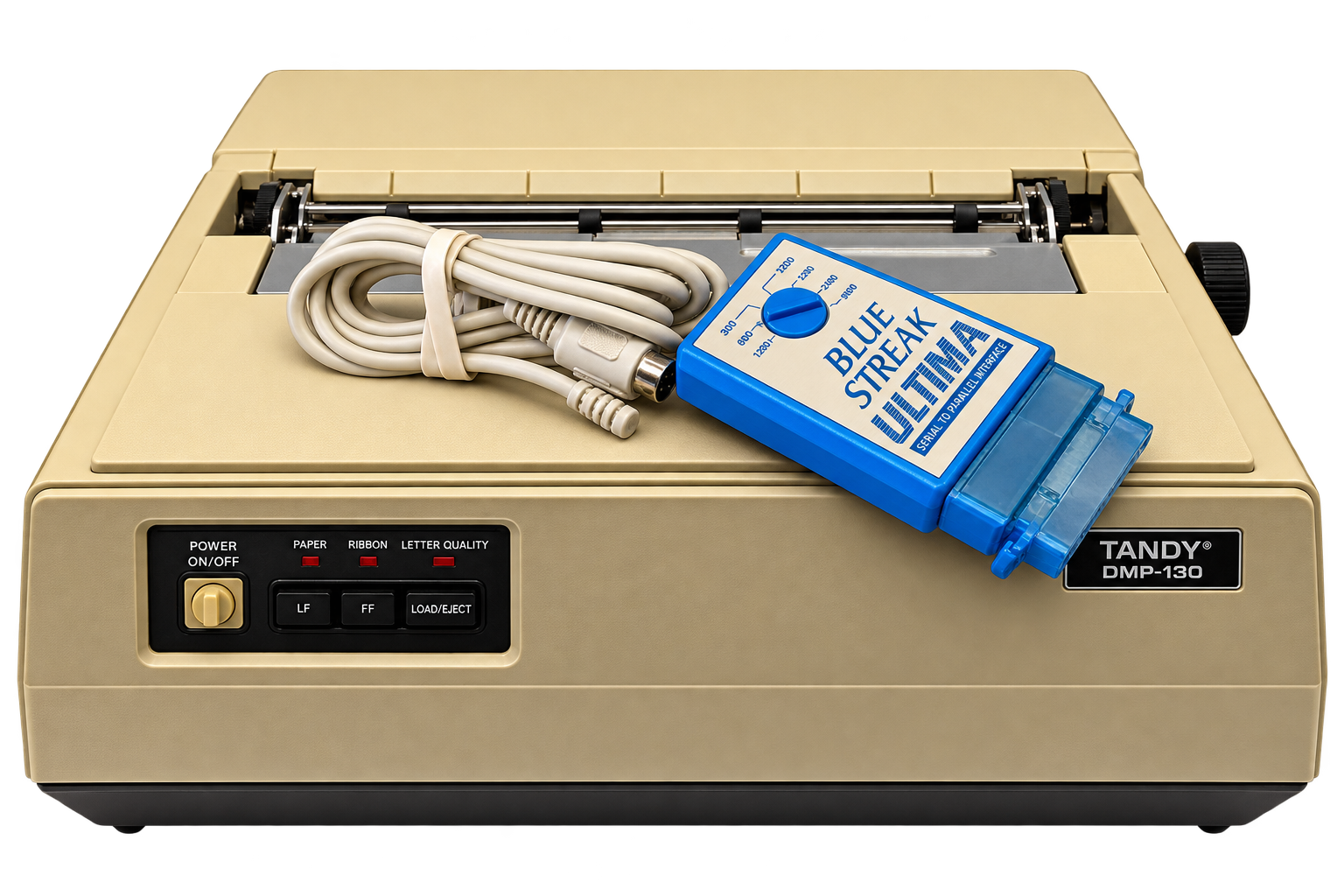
Printers, modems and other computers needed ways to communicate with the CoCo.
RS-232 hardware, parallel interfaces, modem systems, printer interfaces and specialized I/O devices connected the Color Computer to an increasingly large outside world.
Automation & Instrumentation
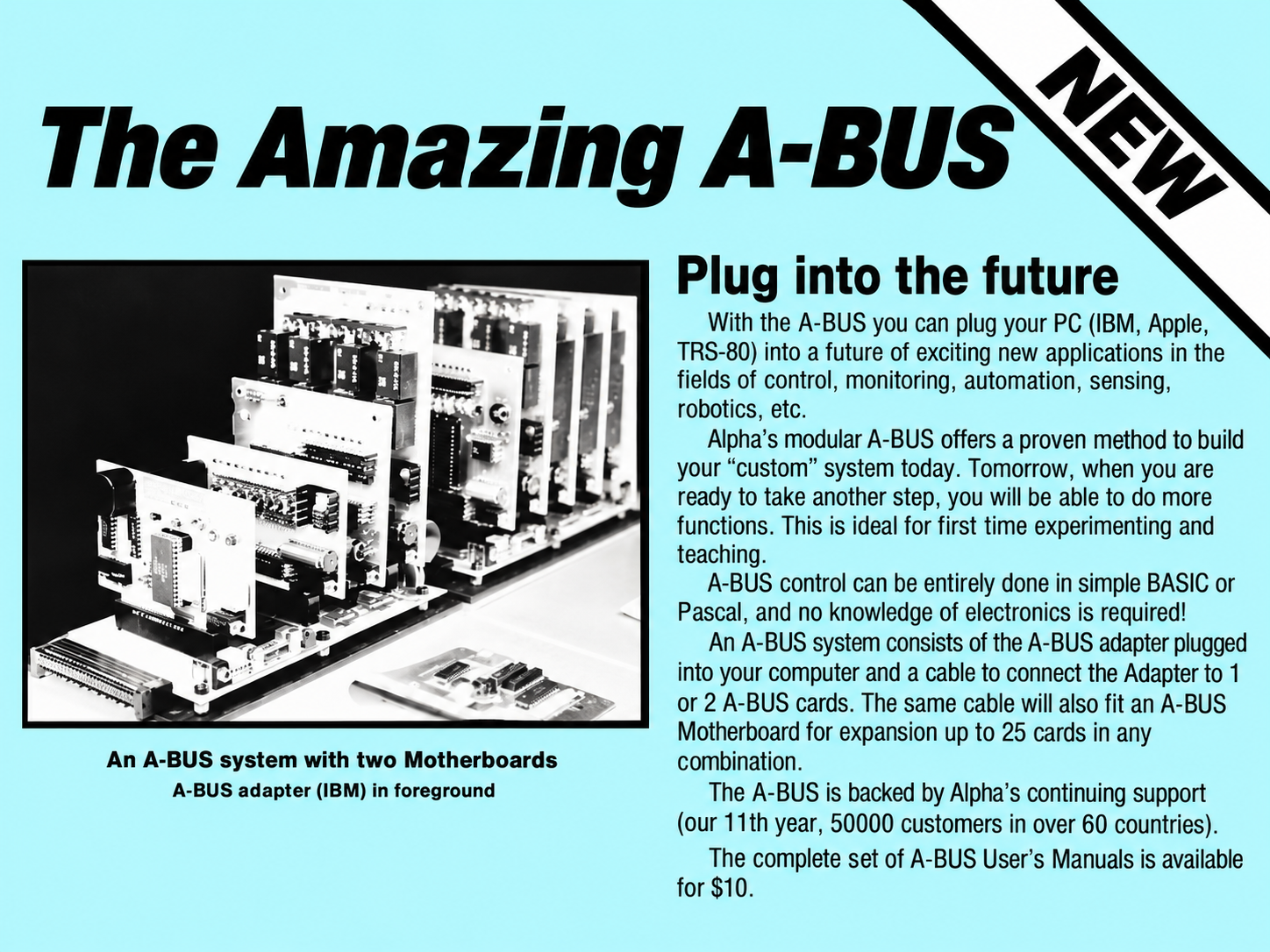
Home automation isn't nearly as new as today's advertisements might suggest.
Relays, sensors, A/D and D/A converters, data-acquisition hardware, robotics and laboratory interfaces allowed the CoCo to interact directly with the physical world.
THE HARDWARE WORKSHOP
Buying hardware was only half of the Color Computer expansion story.
The other half involved a soldering iron.
The Rainbow, HOT CoCo, books, newsletters and user groups published an enormous number of projects that Color Computer owners could build themselves.
Some were simple cables and adapters. Others required circuit boards, ICs, power supplies and considerably more confidence.
Tony DiStefano's hardware articles alone covered printer interfaces, video circuits, sound generators, ROM switching, disk hardware, A/D and D/A conversion, relay systems, EPROM hardware and much more.
That tradition didn't disappear with the magazines. Modern Color Computer enthusiasts continue designing new hardware, publishing schematics, laying out circuit boards and sharing complete projects through open-source repositories.
PERIOD PROJECTS
Projects published during the Color Computer's commercial life: magazine construction articles, homebrew interfaces, modifications and upgrades.
PERIOD PROJECTS
Open-source hardware, reproduction boards, replacement circuitry and entirely new devices created decades after the last CoCo left Tandy.
ENTER THE HARDWARE WPRKSHOP >>
THE EVIDENCE DESK
Documenting third-party Color Computer hardware creates an unusual problem:
How do we know that something actually existed?
An advertisement proves that a product was advertised. It doesn't necessarily prove that anybody bought one.
A manual or schematic provides stronger evidence. A contemporary review or photograph is better still.
And a surviving example sitting on somebody's table settles the matter rather conclusively.
SURVIVING HARDWARE
A physical example is known to exist today.
DOCUMENTED
Manuals, schematics, independent reviews, photographs or other substantial contemporary documentation has been located.
ADVERTISED
Contemporary advertising or manufacturer literature has been located, but surviving hardware has not yet been confirmed.
UNCONFIRMED
References to the product exist, but there is currently not enough evidence to determine whether it reached customers.